14 Jul 2026
Integrating Wearable Sensor Outputs with Real-Time Event Metrics for Cross-Discipline Accumulator Strategies
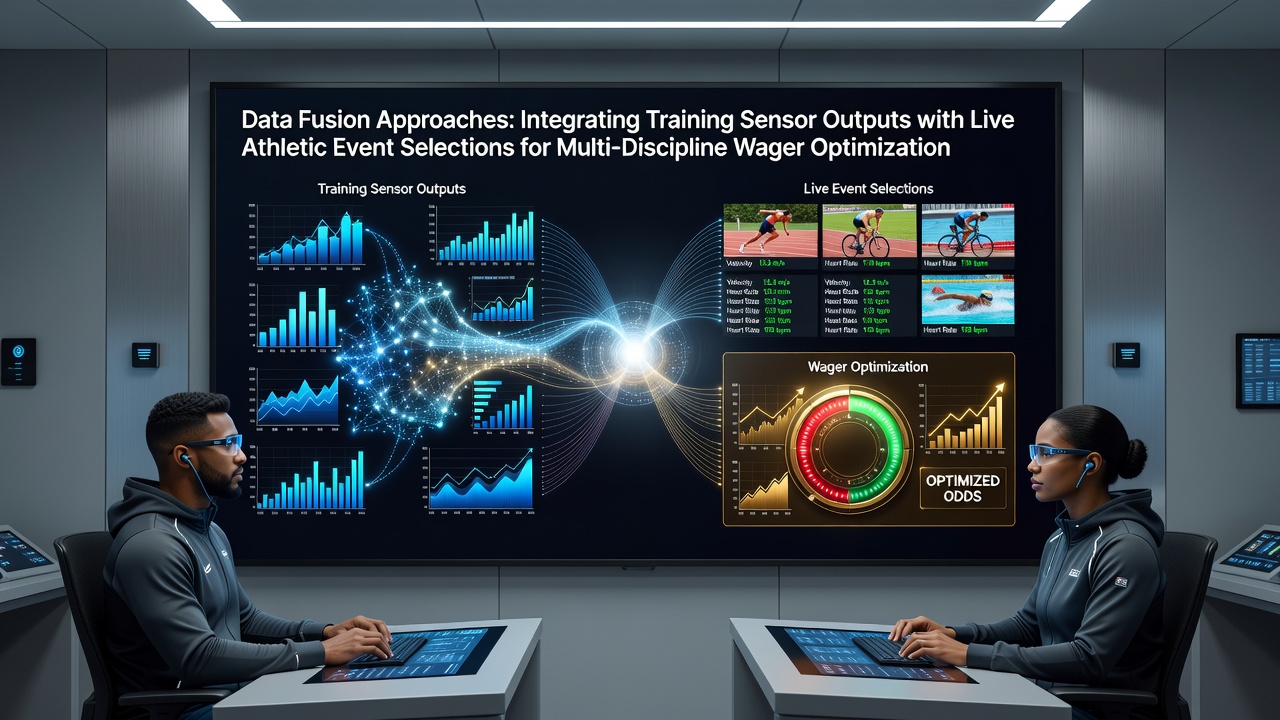
Training environments now generate detailed sensor outputs from wearables and biomechanical devices, while live athletic events supply continuous streams of performance indicators. Data fusion approaches combine these sources to refine selections across multiple disciplines such as horse racing, tennis, and football. Organizations apply these methods to identify correlations that support accumulator structures spanning different sports and markets.
Sensor Technologies Capturing Training Outputs
Modern training programs equip athletes and equine competitors with devices that track heart rate variability, stride mechanics, muscle activation patterns, and recovery metrics. Researchers at institutions like the Australian Institute of Sport have documented how these measurements establish baseline performance profiles for individual participants. When fused with historical event data, the outputs allow analysts to quantify how training adaptations translate into competitive conditions. Studies published in the Journal of Sports Analytics demonstrate that horses monitored through GPS and inertial sensors during preparation phases show measurable links between workload consistency and race-day positioning tendencies.
Live Event Data Streams and Selection Criteria
Real-time feeds from athletic competitions include positional tracking, velocity changes, fatigue indicators, and environmental variables. These streams arrive through official timing systems, broadcast overlays, and venue sensors. In July 2026 several European sports technology providers expanded partnerships with data aggregators to deliver synchronized feeds across tennis courts, football pitches, and racecourses. Observers note that fusing live metrics with pre-event training profiles helps isolate variables such as a player's recent break-point conversion efficiency or a runner's late-race sectional times under similar track conditions.
Fusion Methods for Multi-Discipline Accumulator Construction
Analysts employ layered algorithms that align training sensor records with live selections through time-series matching and probabilistic weighting. One approach normalizes disparate data scales so that a tennis player's serve-speed consistency from training sessions can be compared against a football team's pressing intensity or a horse's gallop cadence. According to reports from the European Gaming and Betting Association, operators in regulated markets have tested fusion pipelines that generate cross-sport accumulator candidates by scoring joint probability thresholds. These pipelines process inputs in parallel rather than sequentially, which reduces latency when markets open during overlapping events.

Practical Implementation Across Sports
Teams managing accumulators that combine football draw markets with tennis set totals and horse racing place selections rely on unified dashboards. These interfaces overlay training-derived fatigue curves onto live momentum indicators, allowing adjustments when an early tennis set reveals unexpected recovery patterns. Data from the Canadian Gaming Association indicates that provinces permitting such technology-assisted strategies recorded increased volumes in multi-leg products during the 2025-2026 season. The integration process treats each discipline as a node in a larger graph, where edges represent statistical dependencies derived from both sensor archives and event logs.
Regulatory and Technical Considerations in 2026
Jurisdictions outside the United Kingdom continue to update frameworks governing the use of performance data in betting products. Australian state regulators have required transparency reports on how fused datasets influence market offerings, while certain Canadian provinces mandate audit trails for algorithmic weighting. Technical challenges include synchronizing timestamps across venues with different clock standards and handling missing sensor readings caused by equipment interference. Solutions involve imputation techniques calibrated against historical distributions rather than real-time assumptions.
Conclusion
Data fusion approaches continue to evolve as sensor density increases and live event coverage expands. By aligning training outputs with real-time selections, practitioners create structured inputs for accumulator models that span horse racing, tennis, football, and emerging disciplines. Ongoing developments in July 2026 reflect broader adoption of these methods within markets that prioritize verifiable data provenance and cross-sport analytical consistency.