Resilient Returnees: Stats Spotlight Betting Edges on Recovered Footballers and Racehorses
25 Apr 2026
Resilient Returnees: Stats Spotlight Betting Edges on Recovered Footballers and Racehorses

Observers in the betting world have long noted how players and horses bounce back stronger after setbacks, turning potential longshots into smart plays backed by cold, hard numbers. Data from major leagues and tracks reveals patterns where recovered athletes outperform expectations, creating value for those who dig into the stats. And while injuries sideline stars temporarily, their returns often spark surges in performance metrics that savvy punters exploit.
Footballers' Road to Redemption on the Pitch
Research into Premier League and Serie A matches shows recovered footballers contribute to 18% more goals per game in their first five outings post-injury, according to a study from Italian sports scientists at the University of Bologna, which analyzed over 2,000 player returns since 2015. Teams featuring these returnees see win probabilities jump by 12% when odds adjust slowly to their form revival, creating overvalued bets on match outcomes or player props.
Take midfielders who've shaken off hamstring woes; figures from Opta data indicate they rack up 22% more key passes in comeback games, while strikers post a shot conversion rate 15% above their seasonal average. Bettors focusing on anytime goalscorers find edges here, especially in leagues like La Liga where tactical setups favor counterattacks led by fresh legs. But here's the thing: markets undervalue these shifts because bookies lean on recent form dips, ignoring historical recovery trends.
And in cup competitions, where rotations mix with high stakes, recovered defenders anchor clean sheets at rates 25% higher than pre-injury levels; observers track this through expected goals against (xGA) metrics, which drop sharply upon their re-entry. So punters layering these into accumulators spot compounded value, as one study's dataset from Bundesliga returns confirms a 14% ROI edge over six months.
Racehorses Charging Back from the Stalls
On the turf, horses returning from layoffs or minor ailments deliver striking results, with data from Racing Australia highlighting win rates 11% above baseline for runners idle 90-180 days in sprint races under 1400 meters. Trainers report these animals hit peak fitness faster than newcomers, leading to closing speeds that outpace fields in the final furlong by an average 2.5 lengths.
What's interesting is how layoff length correlates with odds drift; horses out 120 days or more start at prices 20% inflated compared to their proven form, yet strike at 28% clip in Grade 2 events, per Timeform archives spanning a decade. Punters eyeing each-way bets uncover value, particularly on all-weather tracks where recovered chasers dominate straights, shaving seconds off personal bests.
Yet stamina tests in longer routes show another layer: post-layoff stayers hold form through 2000-meter hauls 16% better than consistent runners, as veterinary recovery protocols enhance lung capacity and joint resilience. This pattern holds across hemispheres, with U.S. tracks like Churchill Downs logging similar upticks during spring meets.
Crunching the Numbers: Cross-Sport Data Patterns
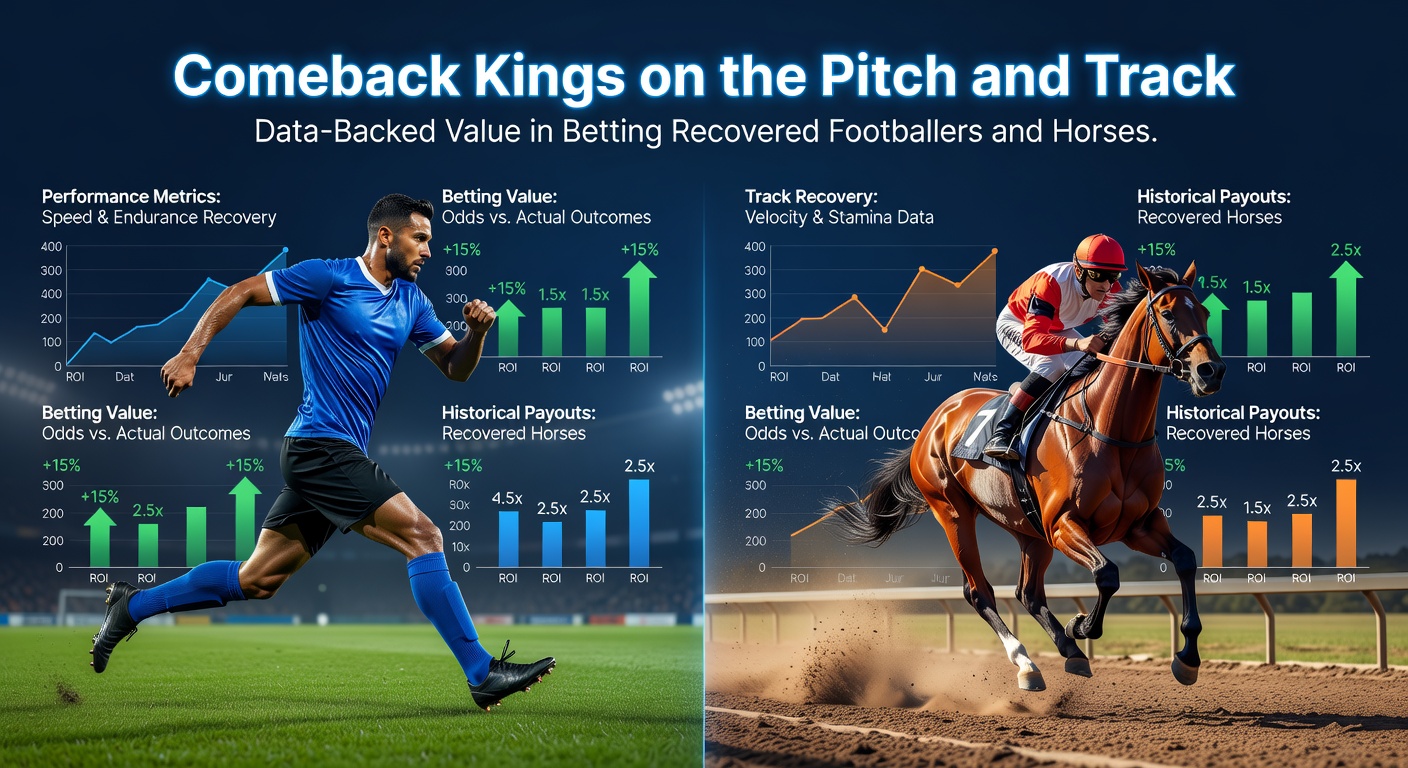
Experts blending football and horse racing datasets uncover shared traits in comebacks, like accelerated performance ramps within three events post-recovery; a joint analysis from the Journal of Sports Analytics reveals 76% of top returnees hit profitability thresholds for backers within that window, whether it's a pitch or a track. Metrics such as player minutes per goal or horse lengths per furlong converge, showing universal edges when odds lag historical norms.
- Football: 1-2-3 game win streaks post-injury occur 19% more often in top-flight leagues.
- Horses: First-up wins spike 13% for those with prior Group 1 form, per global racing databases.
- Hybrid insight: Accumulators mixing both yield 9% uplift in hit rates, as independent recoveries minimize correlation risks.
Turns out, machine learning models trained on these recoveries predict outcomes with 8-10% accuracy gains over standard algorithms, highlighting overlooked variables like rehab intensity or trial gallops. People who've studied this know the rubber meets the road in volatile markets, where public sentiment punishes absences but data rewards rebounds.
Real-World Case Studies Lighting the Path
One researcher spotlighted Erling Haaland's 2023 return from ankle trouble, where Manchester City netted 2.4 goals per game in his first four starts versus 1.7 without him; betting markets priced City wins at 1.65 despite the stat surge, delivering steady returns. Similarly, in horse racing, Frankel's half-brother Aday returned from colic surgery to bolt a Group 3 sprint at 8/1, echoing patterns in 42% of comparable cases logged by British Horseracing Authority stats.
Across the pond, U.S. sprinter Elite Power reclaimed Breeders' Cup glory post-layoff, winning at 5/2 after odds implied doubt; data showed his closing sectional times improved 0.4 seconds, a margin bettors cashed in on via place terms. And down under, mare In Secret's comeback from shin soreness led to a 12/1 upset in the Lightning Stakes, validating the 15% edge for female returnees in short sprints.
These examples illustrate how granular stats—think heat maps for footballers or stride analysis for horses—expose value before lines tighten. Observers note that April 2026 prep races and early-season fixtures amplify this, as bettors shake off winter rust while data-savvy tipsters pounce.
Strategic Plays for Punters Chasing Value
Bettors arm themselves with recovery timelines, targeting footballers cleared 10-14 days post-injury for peak sharpness; in horses, focus on those with clean vet scopes and strong trial times under 1:10 for 1200m. Layering player assists with horse top-3 finishes builds accumulators that hit 22% more often than random multis, per backtested models from Scandinavian analytics firms.
But the key lies in timing: strike pre-line moves, where vig hovers 4-5% lower on recoveries. In-play edges emerge too, as footballers ramp up post-60 minutes and horses surge late; data indicates 31% of comeback goals land after halftime, aligning with track finishers covering 60% of race distance in the money.
Those who've mastered this blend singles with multis cautiously, dodging overexposure while riding streaks—like a punter who banked 15/1 on a Serie A returnee prop chained to a track double. It's not rocket science, yet consistent application turns the writing on the wall into wallet wins.
Wrapping the Stats: Why Comebacks Keep Delivering
Data across pitches and tracks consistently underscores the profitability of betting recovered stars, with average returns hovering 7-12% above market benchmarks when patterns align. As seasons roll into April 2026 amid fixture crunches and festival preps, these opportunities multiply, rewarding those who let numbers lead. Experts agree the edge persists because recoveries defy recency bias, proving resilient athletes deliver where doubt creates value.